Energy ensures order. Energy is necessary for movement and change, but most of all for conservation.
The sun burns and protects. Without solar radiation the earth would become a lifeless body. It would happen in a fleeting moment of evolutionary time, and life on our planet with all its whispers and blooms, would end. Man would not even be able to prolong his own life without the sun, for even the artificial production of food and heat would cease in a few days.
We conceited human beings do not appreciate our dependence on the sun. We think we produce our energy by technology when we extract materials that were formed millions of years ago. This world of technology appears to function by means of coal, oil and natural gas: the sun’s conserved energy. Apparently energy is generated by burning bygone life. More carefully considered this is an illusion. The energy that man uses is only a minute part of all the energy that radiates onto the earth. Even the technological world depends on the sun. Crops and forests grow, fish thrive in the seas, and a stable temperature is preserved. Only a small additional amount of energy is removed from the ground, but even that is excessive. The excess burning of fossil resources is intolerable.
What is Europe’s position in this situation?
Europe is exploiting the earth. Our continent is, relatively speaking, only a small speck, which has been over-populated by people who use other peoples’ coal and oil to pollute the atmosphere of the whole planet and their children’s wealth for their own profligate purposes.
Solving Europe’s energy production permanently and ethically is our key problem. There are three solutions. The first pollutes and uses up capital, the second interferes with the basic structure of matter, and the third requires an immense amount of work to be put into operation. An urgent choice of one of these must be made and then developed to function properly. It cannot be postponed into the distant future. The more unanimous the choice the simpler the solution for its implementation.
The use of our limited energy resources cannot be stopped at once, but resources should be applied to building up new energy capital. Using nonrenewable energy is as irresponsible as eating seed potatoes. Using renewable energy produces both an annual energy interest and increases the capital. The conservation of capital, its lifetime, is another decisive factor. How quickly a certain form of energy increases depends on these two factors. There are two parameters of energy saving which correspond to the previous two. Capital that produces renewable energy and conserves it is the same. Polluting energy that uses dwindling resources is clearly the worse option.
The present practice of the excessive burning of coal and oil, which is both destructive and to be condemned, must without question be excluded from Europe’s future.
FOSSIL FUELS
The campaign against coal at the turn of the century was felt most in Poland, the Czech Republic and Slovakia. Before that time Poland’s energy production depended entirely on coal, and emissions into the atmosphere had been rigorously condemned. However giving up coal had been both difficult and expensive, in fact agonising.
Wojciech Skolimowsky had been lucky enough to get a job at the new super wood chip power plant. It operates in northern Poland and produces immense amounts of electricity and heat each year. Wojciech’s job is to sell the energy produced to different parts of Europe. He is on evening shift and monitoring offers from a French breeder reactor and a Swiss three-level power station. They vary from one moment to the next, as do dozens of others to buy and sell. The price of electricity is made up of many different elements, but a producer near the consumer gets home-ground benefit on the continental market.
At night the price of electricity falls, wavelike, from east to west over the whole continent, and begins to rise again the next morning from the east in step with demand and the working day. It is May 2035 and the seasonal change in weather has forced the price to its lowest level. Throughout the evening Wojciech has kept his eye on an offer enquiry from one German town for its June requirement, and it seems that a deal will be made before midnight, unless a Swiss power station intervenes.
The greenhouse effect
Europeans today depend on fossil fuels. Almost all the energy required for factories, transportation and heating comes either by drilling or mining the bowels of the earth for organic matter formed millions of years ago.
This is a fundamental problem. In a short while the earth’s atmosphere will be threatened by the greenhouse effect, which causes heating of the atmosphere. The phenomenon is not on the way, it is already occurring. People in the Nordic countries have noticed it in recent years from short, slushy and snowless winters. Meteorologists have acknowledged it in precise statistics. It is much discussed, but little is done. Its harmful effects have been widely described in numerous articles and papers, but here I will only mention its basic nature and some of its consequences.
The greenhouse effect is caused by gases emitted into the atmosphere. There are several greenhouse gases, the main one being carbon dioxide. There is already a quarter more carbon dioxide in the atmosphere than under the stable conditions at the beginning of the 19th century. Carbon dioxide is produced by burning oil, coal, natural gas and wood. Decaying wood also emits carbon dioxide. Greenhouse gases form a blanket around the earth which prevents radiation returning back into space as easily as before.
The most important of the discernible changes is the warming up of the climate with all its numerous consequences. Compared to normal evolutionary changes this warming is very rapid, and it has been estimated that within the next generation it will radically effect living conditions over the whole globe in many different ways (Figure 65). Many croplands in now fertile areas are expected to dry up, and forest growth will be disrupted. Trees are not prepared for rapid change as the different varieties have adapted over thousands of years to the climate and soil of the place where they grow, and neither can forests be moved to a different latitude. The life of a tree is longer than man’s and its genotype changes only over a long period of time.

Figure 65. Estimate of changes in average temperatures by 2100
(Source: Research on Fuel-Gas Carbon Dioxide Recovery Technology, 1992)
The level of the oceans is expected to rise by half of metre, which will require the large-scale reconstruction of many coastal towns. The advance of the greenhouse effect is unavoidable and its harmful effects unquestionable. The solution is not adapting to it, but preventing it.
Purification of combustion gases
The burning of oil and coal does not only emit carbon dioxide, but also sulphur and nitrogen oxides. It is possible to separate these oxides from combustion gases, though the cost rises sharply with the degree of purification obtained. Carbon dioxide can also be separated, but the problem is still economic. The IEA (International Energy Agency) has done extensive research on separating carbon dioxide from combustion gases. First, a small scale station for basic tests was built at Sakaido, Japan, in 1992, and in 1996 a proper testing station was established at Nanko in Osaka. The latter station is able to separate two tonnes of carbon dioxide per day from combustion gases.
A combination of mechanical and chemical technology is used. What happens is that combustion gases are initially fed through a ceramic filter which separates a still impure carbon dioxide mixture from other combustion gases. This mixture is fixed by chemical reaction in an amine-based solution and the CO² separated as a pure gas. The separated carbon is liquidised and put into permanent storage. Optimum permanent large-scale storage places are thought to be either exhausted natural gas cavities or deep ocean bed depressions, where carbon dioxide would remain liquid owing to the high pressure.
So carbon dioxide can be separated from combustion gases. People who support this method point to the enormous coal resources still available and to the safety of this form of energy so long as purification succeeds. Up to now the price of clean energy is estimated to be double the costs of the best power stations in existence – which is too much. This technology has to be improved. Another weak point is that although this solution is long-term, it is not long lasting like the sun.
Europe’s coal balance
Eighty-one per cent of Europe’s energy consumption comes from actual burning. The division between different fuels is as follows: 26 per cent coal, 36 per cent oil, 19 per cent natural gas. In addition to actual burning, over half of the electricity is also produced by burning. Only the remaining 9 per cent of energy consumed does not raise the carbon dioxide level in the atmosphere. This is spread among different sectors, but the only long-term solutions are breeder reactors and various forms of solar energy. A third possibility is the purification technology mentioned above and developing it into an immense, economical and efficient system. Is this option realistic?
Europe’s coal emissions into the atmosphere are 1500 million tonnes a year (Figures 66 and 67). The growth of European forests binds 136 million tonnes of carbon dioxide a year. If no trees were felled this would decrease the harmful effect by only six per cent, but there is no hope that this would happen. Our present production keeps the number of trees at the same level. Europe as a continent cannot balance its own share of the level of carbon on earth and in the atmosphere. Europe is the most irresponsible continent in this respect. It includes another imbalance: 30 per cent of Europe’s carbon emissions come from coal that is imported, not mined on the continent itself.
To be a realistic and plausible solution, the purification of carbon dioxide should be technically in working order on the continent during the next two generations. How could this be achieved on the necessary scale? What should be done about traffic emissions? Are we prepared to make the necessary investments? Why not at the same time try to reach a solution which is sustainable?
The case of Poland
Poland has always been an important producer and consumer of coal. The Gdansk Power Station Company produces energy in five different power stations, two of which are in Gdansk and three in Gdynia. The biggest is the Gdansk Ec II station with an annual output of 936 MWh as pure heat and 232 MWh as pure electricity (Figure 68). The station normally produces both electricity and heat, and its effective working time is 8000 hours a year. It satisfies the energy needs of 300 000 people and uses 750 000 tonnes of coal annually.

Figure 66. Circulation of carbon in Europe
(Source: Commodity Trade Statistics 1993, 1994)

Figure 67. Liquid and solid fuels used in Europe
(Source: Commodity Trade Statistics 1993, 1994)

Figure 68. The Gdansk coal-fired power station
The Gdansk power station is a good example of a modern production unit where special attention is paid to emissions of sulphur, nitrogen oxide, carbon monoxide and dust. The level of these has decreased radically over the last few years. An intelligent use of waste ash has also been developed. It is pressed into small pellets and added to stone aggregate in concrete. The specific weight of the concrete decreases and its thermal insulation capacity improves.
The most difficult problem of a coal power station, carbon dioxide emissions, has not been solved in Poland, nor anywhere else. The Gdansk power station emits 0.5 per mille of all emissions in Europe. The Japanese Nanko plant is very proud when it announces that it can purify about one per mille of the carbon dioxide produced by the Gdansk power station. In theory the purification of coal can work, but we shall have to wait decades for practical results, and that’s too long.
An end to coal burning
The most sustained and economical means to prevent the greenhouse effect is to decrease the burning of oil and coal, and to plant trees in the deserts of the world. These forests would absorb the carbon dioxide emitted, so the greenhouse effect could not advance. In these circumstances we cannot burn wood or even let it decay, the carbon dioxide absorbed should be buried in the ground or taken into long-term use. Replacing forests that have been felled is not enough. Huge new areas must be reforested in order to bind the excess carbon already emitted into the atmosphere.
Most important for the future of European energy is that the use of coal and oil should be reduced to about one tenth of its present level. Even then the situation would not be stable as the carbon emitted by burning natural gas is not compensated by the growth of forests and neither can the felling of trees be stopped. Extensive planting of trees in deserts of other continents is the only way by which Europe could compensate for the harm it has caused. But to compensate present emissions by planting is impossible. Emissions must be radically reduced.
Another reason for giving up the use of fossil fuels is to preserve natural resources for future generations. There are purposes for which the use of any other form of energy is impossible and even foolish. For example, it will not be possible for a long time to come to develop fast electrically-powered aircraft. Gliders can be airborne for quite a time, but even then it is only a few hours. If a thin solar film producing electricity were applied to the wings, the flying time would be increased considerably, and a craft could be designed to stay up above the clouds as long as daylight lasted. Another possibility is an airship using solar energy, where the whole surface of the ship would be covered with a thin film producing electricity. These are, however, fairly slow moving. Fast-moving aircraft for people in a hurry rely on explosive fuels.
Later on in this book I will describe how internal transportation in Europe could be replaced by trains using magnetic levitation and electricity. Even if aircraft were not necessary in Europe, it would be still be desirable to continue intercontinental flights and also use them for special cases. Because flying could not stop entirely, valuable fossil fuels must be reserved for special flights in the future. These decisions are not the concern of the next century but the distant future.
The burning of coal must be reduced to a small fraction of its present level. The energy solution discussed later on presumes that Europe would give up using fossil fuels in stages over the next two generations. Energy production would be replaced by technologies already in existence, so that a self-sufficient Europe would not worsen global problems. The solution described may sound expensive and unrealistic to many people, but on these critics rests the onerous task of producing viable alternatives. Problems have to be solved quickly and permanently, and continuing to burn coal is not an option.
Chip-fired power plants
Burning wood also increases the level of carbon dioxide in the atmosphere. This could be accepted if the fuelwood forests used up were replaced, for then the chip power station would not upset the balance. The idea can be developed further: trees are only grown to absorb carbon dioxide from the atmosphere, they should not be burned but stored, for example, in dry disused mines, thus redeeming the right to use fossil resources. This is not meant as a practical option, only a theoretical possibility.
Using wood for energy should not be rejected outright. Wood is an important source of energy in many parts of the world, but we have to learn to use it in a responsible way. A noteworthy future energy form is the use of wood from specially grown trees, as well as waste wood, in modern power plants. The process should be developed into a fully automated industry, likewise the actual production of wood. That is why preparing the soil for planting fuelwood, cultivating, harvesting, chipping, and finally transporting to the power plant, should be carried out mainly with unmanned, remote-controlled, programmed equipment. This sort of equipment is better suited to growing fuelwood than crops. The production of pulp chemically does not require energy from outside, some of the raw material is processed into a product, and lignin is used for energy. This carbon dioxide addition should be accepted as well. Production of this raw material requires a relatively large area. This type of energy technology does not suit regions where living space is at a premium, but is ideal for the Nordic countries where there is still plenty of space available.

Figure 69. Wood chip power plant’s flow diagram and costs in Finnish conditions
(Source: Imatran Voima Oy)
The energy production plants envisaged here to be built in the Nordic countries and less populated areas of central Europe, would be located in the middle of vast plantations of willows providing a continuous supply of fuel. A typical power plant would produce both heat and electricity. Electricity can be easily transmitted over long distances but, for the sake of efficiency, it would be more profitable if the heat produced could be used as close to the plant as possible. So this type of power plant would preferably be situated in the neighborhood of an urban conurbation.
The costs of a typical power plant, its material and energy flows, are shown in Figure 69.
Fuelwood in Europe
In the plan discussed, Europe’s basic energy would be produced in three-level power plants, where wind, solar and geothermal energy are produced in the same area. I will return to the technical structure of these power plants later on. This basic solution produces considerably more energy per area unit than trees. Nevertheless power plants using wood chips are also suggested for six geographical regions (Figures 70 and 71). These regions are the Nordic and Baltic countries, south-west France, the Iberian peninsula, and the south-east and northern parts of the Balkans. These power plants together would require an area of 63 000 square kilometres, and produce 1.5 million terajoules of energy per year. This would require 650 of the plants described, but they would provide only three per cent of the energy to be compensated. The main part of the energy produced is pure heat, so their total output would be higher than in the example. Furthermore, the average growth of energy trees in Europe is faster than in Finland for instance. That is why the number of power plants and the area required cannot be directly calculated from the above example.
Power plants using wood chips are important because they provide one option. Although three-level power plants are efficient and require less space, essential energy production should not become one-sided. This easily leads to centralised control, to monopoly, a sellers’ market, quality deterioration, and rocketing prices. That is why power plants using chips are suggested in addition to the three-level power plants. They would be built according to the calculations shown in the appendix, where the typical output of each area is estimated to vary in proportion to the sun’s radiation (Figure 72).

Figure 70. Planned energy production from wood chips in different areas. (See Figure 40)

Figure 71. Assumed basic output from wood chip power plants in different areas. (See Figure 40)

Figure 72. Europe’s planned energy areas, built areas and “other land.” (See Appendix 1 for calculations)
Built area, 20 000 sq. km
Other land, 20 000 sq. km.
Energy production, 20 000 sq. km.
Fuelwood forests, 20 00 sq. km.
Special attention should be paid to solutions in the Baltic and Nordic countries. According to the plan for these regions, power plants using wood chips would produce electricity in addition to heat. Ten per cent of the compensated energy would be produced by fuelwood in these countries. Elsewhere the output of these power plants is assumed to be heat only. Electricity would be produced by wind and sun.
Thus a small part of the energy problem would be solved: three per cent. What about the rest?
NUCLEAR ENERGY
Only one European country opposed the new energy law to the bitter end and finally remained outside it. France believed, and still believes, more in splitting the atom than in using the sun. We still have to wait for fusion energy. The last outdated light-water reactors in Europe are closing down, but France still has 28 breeder reactors, descendants of the old Creys-Malville, which provide the country with its electricity.
It is not surprising then that Maurice Pascal is an important man. He is responsible for highly controversial security questions of energy production, and thus for the future of France. Even the president takes note when he talks to him. So today, the 26th May 2035, is nothing out of the ordinary for him. In the great hall of his summer residence, a medieval chateau, a number of industrialists and top politicians have assembled under the glittering chandeliers to raise their glasses to toast his health. Waiters in dinner jackets stand by with their trays of delicious lamb and top-quality vegetables, all produced under ideal conditions. There are pasties, caviar, brawn and smoked eels on offer.
“Ladies and gentlemen,” begins the Minister of Industry, and turns to his host, Maurice Pascal…
The share of nuclear power
I am against nuclear power, but more than that I am against the stupid opponents of nuclear power. I have a rational opposition to nuclear power. This must be made clear at the start, because few issues have so divided people their attitude towards nuclear power. This sharp division is religious, not rational.
Nuclear energy is produced when mass is converted into energy by splitting or fusing nuclei. Nuclear energy is the newest and most widespread and economically important form of energy. It is converted mainly into electricity, heat is only a by-product. There is a shortage of electricity, not of heat, which is why nuclear energy cannot be by-passed, and certainly not because of liturgical arguments that only breed unreasonable fears. This type of energy will now be discussed from the technical and not from the political point of view. Here I will concentrate on the sufficiency of fuel and of other resources such as time.
Power stations producing nuclear energy have been built in 126 different places in Europe (Figure 73). These produce 840 terawatt hours of energy annually, which is 30 per cent of the continent’s electricity production and 4.5 per cent of its total energy consumption. The average capacity of each site is 1050 megawatts. Can Europe’s future energy requirements be solved by nuclear power, permanently or at least temporarily? Can the same model be applied to global energy problems?
Traditional nuclear power stations
Traditional nuclear energy is produced by splitting atom nuclei, by fission. This reaction produces waste, which is highly radio-active and dangerous to life. Some of it decays in hours, the longest half-life is thousands of years. The waste must be treated or stored, and for this there three alternative solutions.
Waste can be stored temporarily and transferred to final storage later on, it can be reprocessed and part of it reused in traditional reactors, or it can be split again in breeder reactors. For a proper assessment of the overall benefits and drawbacks, as well as to compare these alternatives, material and energy flows should be monitored from extraction to final storage. This, however, would require another book, so I shall only give a general outline of the main characteristics of the different processes.
The total annual production of natural uranium is about 35 000 tonnes. Known and estimated sources that can be utilised at a reasonable cost are a little over two million tonnes. All the reserves, including conjectured reserves, are about eight times as much. Most of it is produced outside Europe, the most important sources being Canada, the former Soviet Union and Australia.
The composition of natural uranium is such that it requires refinement before it can be used as a fuel. Natural uranium contains over 99 per cent uranium 238 and about 0.7 per cent uranium 235. The basic difference in these isotopes is that uranium 235 decays and releases neutrons, whereas uranium 238 captures neutrons. For a nuclear reaction to occur in a traditional, light-water reactor, it must have at least 2-3 per cent of uranium 235 in the total fuel mix.

Figure 73. Europe’s nuclear power stations
Fuel production undergoes many stages. Mined natural uranium ore is crushed, dissolved, enriched by extraction and precipitated into uranium concentrate, filtered, dissolved in nitric acid, then after many other processes a uranyl nitric solution is produced, which is first converted into uranium tetrafluoride and then into uranium hexafluoride, which is transported in pressurised containers for concentration, where a concentrated gas containing 3 per cent U-235 is produced by gas diffusion or centrifugal action, after which it is transported as solid uranium hexafluoride to a fuel production plant where concentrated uranium hexafluoride is converted into powdery uranium dioxide, then pressed into tablets which are sintered for further concentration, ground into precise sizes, assembled in long chains, inserted into protective tubes made of zircon alloy, the fuel rods are bound into fuel bundles and transported to power stations in special transports. Is that clear?
Some 0.025 g of natural uranium is consumed per kilowatt hour. European nuclear power stations would use about 21 000 tonnes of uranium a year if they only use natural uranium as a fuel. That costs about USD 1.4 billion, which is only a fraction of the total costs of the energy produced.
A nuclear power station of 1000 megawatts produces 30 000 kilograms of uranium waste a year. In the process it is degraded. This includes only 300 kilos of U-235 and 400 kilos of plutonium.
When the fuel is spent it is put into temporary storage for 3-5 years, usually in the locality of the power station. After that the three alternative solutions mentioned above can be considered: permanent disposal of the waste, reprocessing for future use, or reuse in a breeder reactor. France and Great Britain, who have invested heavily in nuclear power, have chosen the latter two options, but Sweden, for example, has opted for the first.
Reprocessed waste must also be put into permanent storage eventually. That is why it is sensible to look at reprocessing as a temporary stage, by which old waste can be converted into new fuel. In this option, the power station’s highly radioactive waste, spent fuel elements, are transported in containers to a reprocessing plant where it is crushed and treated with nitric acid to separate out the uranium and plutonium in the waste. The process is purely chemical, so the quantity of chemical elements in the waste does not change. For example, the quantity of uranium and plutonium isotopes is the same as in the waste coming from the power stations. Reprocessing is in many respects more demanding and more complicated, but also a more dangerous process than producing fuel from natural uranium. As the whole process is subject to radiation danger it has to be done under remote control. It is, therefore, worth treating the waste of several power stations in one reprocessing plant. The cost of such a plant is many times that of a nuclear power station.
Uranium produced by reprocessing, and in some cases plutonium too, can be reused in nuclear power stations. The most important reprocessing plant is situated in La Hague in France, where there are two major units, plus a third one which is smaller and out of date. Both of these produce 800 tonnes of uranium a year, one for local use and the other for overseas use. The U-235 content of reprocessed uranium is about 1.2 per cent. It has to be further concentrated if used in light-water reactors. Reactors using heavy water or graphite as a moderator can use less concentrated uranium fuel. It is usually calculated that the total amount of energy produced by one tonne of mined uranium can be doubled by reprocessing. This is a significant result from the point of view of fuel sufficiency.
Reprocessing for non-military use will become an economical proposition only when global uranium reserves are exhausted or the costs of mining natural uranium have become prohibitive. Even then natural resources will not last. The inevitable conclusion, therefore, is that traditional nuclear power stations are not the answer to our energy problem, because the fuel will run out too soon.
There are many types of fission reactors. The most common is a thermal light-water reactor, where ordinary water is used as a moderator for reaching the required balance and the uranium 235 content of the fuel mix is concentrated at about 3 per cent (Figure 74). There are several types of light-water reactors, the most common are pressurised water and boiling water ones. Because the intention here is not to discuss the safety questions of nuclear power stations but only the sufficiency of the fuel, I shall not go into any details concerning the operation and safety of nuclear power stations. It should be stressed that the possibility of completely unforeseen human error or deliberate mischief cannot be excluded, although safety is based on probability.

Figure 74. Functional diagram of a light-water reactor
(Source: Härö et al, 1993)
Breeder reactors
Traditional nuclear power stations will not solve Europe’s energy problem, because the supply of raw material will run out. That is why it is also necessary to discuss a rarer type of nuclear power station, the breeder reactor, of which France has two, the Phoenix and Superphoenix (Figures 75 and 76). Technically a breeder reactor differs from the above mentioned thermal reactor mainly in that it uses liquid sodium as a coolant, so its vapourisation heat is high, 892oC, and melting point 98oC. Because sodium does not slow down the movement of particles as water does, the movement of neutrons in the nuclear reaction is fast, many thousands of times faster than in light-water reactors. That is why breeder reactors are also called fast reactors.

Figure 75. Breeder reactor diagram
(Source: Härö et al, 1993)
In addition to uranium, plutonium is also used as fuel, which means the nuclear waste is reusable in the reactor. This shows the main advantage of a breeder reactor: low consumption of fuel. When generating energy with breeder reactors a hundredfold amount of energy is produced per kilo of mined uranium compared to a traditional light-water reactor, where the fuel is not retreated but put into permanent storage after it has only been used once (Commodity Trade Statistics 1993, 1994).
Now we come to the main problem of energy in the future: the sufficiency of fuel. Let us consider, for example, Europe’s electricity production over the next 30 years. If we estimate that 20 per cent of assumed uranium resources were available for Europe’s use, this is clearly too large a share of global resources whatever way you look at it. It would amount to three million tonnes, which is about the same as all definitely known resources.

Figure 76. Creys-Malville breeder reactor
If consumption were to remain at the present level, Europe’s need for electricity over the next 30 years would be 84 000 terawatt hours. This would require 2.1 million tonnes of uranium, but this would only amount to 15 per cent of the total energy requirement. On the same principle, by using breeder reactors, fuel resources would last 3000 years. The period would be even longer if thorium were to be mined for fuel in addition to uranium. This could also be a practical theoretical possibility. Why, therefore, do we not decide now that slow, light-water reactors be considered only a short intermediate stage, and that the long-term future for global energy rests with breeder reactors?
There are at least two reasons for this: cost and safety.
Both fuel and capital costs in breeder reactors are much higher than in existing light-water reactors. The overall price ratio is estimated to be double that of today’s reactors.
Safety is a more important problem and there are at least four factors involved. Firstly, if liquid sodium is used as a coolant it must be kept in an enclosed space, because it cannot be in contact with water or air. This requires special safety precautions for cooling pipes and preventing their corrosion. Secondly, plutonium used as fuel is extremely toxic even in minute doses. Thirdly, stainless steel is used in protective pipes instead of zircon. Fuel inside the pipes embrittles in a much shorter time in fast reaction than in slow reaction, and this corrodes the steel used as the protecting material. This is why leaks occur more easily. Finally, all the processes in a breeder reactor are sudden, the complicated structure increases potential damage, and all dangerous situations are acute. Even with quick-reaction, automatic control systems it is more difficult to anticipate them.
For the above reasons, even the most ardent supporters of traditional nuclear power have not spoken in favour of breeder reactors in recent years.
A strong belief in breeder reactors as the future supplier of energy prevails in the sphere of the world’s most significant breeder reactor, Creys-Malville. This is mainly due to the availability of fuel and certain safety aspects, on the basis of which a breeder reactor is regarded as safer than a traditional light-water reactor. These aspects are that the pressure of the hot sodium is decisively less than that of cooling water in a light-water reactor, and the nuclear reaction is isolated from the surroundings with four shells instead of three, the first of which is the cover of the fuel rod itself.
There have been two serious breakdowns in the Creys-Malville power plant during operation, in April 1987 and July 1990. In both cases the power plant was at a standstill for several months. At the request of the French government, extensive repairs were carried out to make the plant safer, and it was again in use in the autumn of 1995. If – and here I have my doubts – the breeder reactor operates flawlessly over the next few decades, and if it proves to be quite safe, it will be a more important option for producing energy than a traditional reactor as its technology is not temporary and will fulfill our needs for centuries to come.

Figure 77. Fusion reactor diagram
In a fusion reactor, deuterium used as fuel is heated in a doughnut-shaped plasma chamber to over 100 million degrees Celsius. This heats the water circulating in the pipes, which in turn heats the steam fed to the generator. It converts flow energy into electricity.
Fusion reactors
Nuclear power supporters often say that fission reactors are only intended as an interim stage, and that the final solution rests with risk-free fusion plants with unlimited supplies of fuel. In fission the nuclei split, in fusion they fuse. What else?
Tokamak is the keyword in fusion reactors. It means a doughnut-shaped ring where fusion reaction takes place in plasma kept at very high temperatures. The largest tokamaks in use are in Culham in the United Kingdom, Princeton in the United States, and in Tokyo. Their outer radius is 2.5 – 3.0 metres. The most significant result in these reactors so far has been achieving a capacity of 9 megawatts within a few seconds, where, however, the input has been higher, about 40 megawatts.
The IAEA (International Atomic Energy Agency) has for years worked on a project which would produce more energy than had been fed in. The location of this tokamak has not yet been decided; suggested candidates have been France, Germany, Sweden, Japan and Canada. The intention is that the new reactor would reach a capacity of 1500 megawatts with an input of 100 megawatts. The process has been planned to operate for half an hour at a time.
After the reaction, the heat generated by fusion would be fed in the traditional way to power generators (Figure 77). According to the schedule, the prototype of such a reactor should be completed around the year 2005. The plan envisages a trial period of 15 years, after which a demonstration plant would be built to encourage industry to start commercial operations. It is estimated that the first commercial reactors would be in use by the year 2040. It has been calculated that these future reactors would have electricity capacity of 1500 megawatts and an additional thermal capacity of 4000 megawatts. Three hundred such reactors should be built in Europe. Efforts have been made for years to raise the money to finance the building of the first experimental reactor, estimated to cost about six billion ECU.
The above plans are an obvious and important reason for the temporary storage of spent fuel in lieu of permanent storage. The future of the world’s energy is, for the time being, open. If it is decided to continue with nuclear power, the present light-water reactors cannot be considered a sustainable option. The choice has then to be made between breeder and fusion reactors. For breeder reactors to have a chance they do not want to dispose of reusable nuclear material irretrievably. Once the present usable uranium resources start dwindling, the price will rise, and the pressure for new and more effective forms of energy production will increase.
The more important decision, however, is the choice between nuclear power and solar power. Only if nuclear power is chosen should the question be asked: breeder or fusion reactors? Money should not be poured into both, because it is certain that one of them will replace the other. This sort of analysis is urgent and necessary, but solar energy as a viable solution to our wider problem must be dealt with first.
ELECTRIC POWER
Klaus Singer was stingy as a child, so it was no surprise when he grew up that he became an expert in saving energy. His job in Bavaria is to purchase electricity for the cybercab network and optimise the use of energy within the whole system. He follows the fluctuation of consumption in the zone, which can to some extent be controlled adjusting the routes.
On the evening of 26th May, whilst he is playing petanque with his wife and a couple of friends in the garden, his pocket communicator is simultaneously receiving energy offers from all over Europe. It bleeps whenever an interesting offer appears. Every now and then, when the others have their turn to throw, he checks on the latest figures on the energy exchange market. He has prepared for peak consumption around about nine in the evening, when a football match in the Munich olympic stadium finishes and the spectators take the ten thousand cybercabs into use simultaneously. It is then very important to have a cheap offer from somewhere.
The energy market operates round the clock. All European plants quote their prices regularly and business is transacted all the time. During the last few hours competitive offers have been coming in from the Lopuzsno bioplant in Poland, which Klaus Singer has been monitoring with great interest. At a quarter to nine he strikes a deal with them, types out his order for ten gigawatt hours over the ether, then returns to the game and executes a cunning contre coup.
Hydroelectric power
Rapids, wind and wood are ancient forms of energy, but here we have to talk about electricity and its production. Traditionally the production of electricity is only that produced by hydropower, not by condensing power plants, new-type wind turbines or solar radiation. This oldest form of electricity is still important in Austria, France, Italy, Switzerland, Norway, Sweden, Finland, Spain and the former Yugoslavia. (Iceland has been excluded.) The most obvious and proven example is Norway, but other mountainous countries like Austria, Switzerland, Croatia and Serbia also produce an essential part of their electricity using this traditional technology. France and Italy also have mountains, on the other hand Finland’s and Sweden’s hydropower is not based on differences of height, but on the small populations served and a relatively large number of long rivers. The significance of hydropower increases if a country does not produce electricity by nuclear power.
The nine countries mentioned above produce 85 per cent of Europe’s hydroelectric power (Figure 78), yet this accounts for less than 5 per cent of the total energy production. With the exception of these countries, the share of this type of energy in Europe is negligible. Rapids in Germany, Great Britain, Holland, Belgium, Poland and Hungary hardly help at all. Over the whole continent traditional production of electricity is very small.
Energy production using tidal or wave action is negligible, though a new power plant using wave energy was commissioned in July 1995 in Scotland. Its cost in serial production is estimated at USD 2.6 million. The capacity of this plant is 2 megawatts, so that its cost-effectiveness is economical compared with traditional energy producers.

Figure 78. Electricity production from hydroelectric power in different countries, 1992
(Source: Energy Statistics Yearbook 1991, 1993)
Existing means of electricity production cannot solve Europe’s energy future, even if the technology were improved. Its share of energy production is in the same category now as nuclear power, but it is not a potential solution for the future. Due to its obvious physical limitations the use of hydroelectric power will not increase. Rivers have been harnessed already. The significance of tidal power is minimal. Traditional power sources could only be a solution in a Europe whose population was a fraction of what it is now and could manage with significantly more stringent means than at present. Such a future is unrealistic. It is quite impossible for Europe to solve its most immediate problem of energy by using traditional means.
Energy saving
The total amount of energy used annually in Europe is shocking – 70 million terajoules. This quantity of energy – if it was used in an even more futile way than now – could lift a ten-metre thick layer of the earth’s crust the size of Europe to a height of one hundred metres. This picture helps us to visualise the amount of work necessary, for example, to construct the new nature reserves, eco villages or new traffic infrastructure, establish extensive energy parks, or recycle waste water in large cities. The measures necessary to move or process materials will not collapse because of the lack of energy.
The above example is, in a way, a provocation. It causes a mental aberration, because the heat equivalent of mechanical energy is small, while heating water and air uses a lot of energy. The real problem, however, is the low price of energy as this encourages senseless and wasteful use. Europe could save vast amounts of its present energy consumption without any danger of soup lines being formed or many creature comforts being sacrificed.
I will discuss the use of solar energy as a solution later on, but before it can be used on a large scale, we can survive for a while by limiting our consumption of energy, rather than its production.
Saving energy should be related to the present situation. Perhaps there will be no problem of wasting energy in future. When energy is produced from renewable resources, free of pollution, and energy capital is increased in the same way, the only scarcity factor will be the space required by the power plants. Once the population has been reduced and balanced, and the use of energy stabilised, periodical increases and decreases in energy consumption would no longer be important. But before we reach that situation, energy saving is of prime importance.
The fundamental question of energy strategy is not necessarily how to produce more energy, but how to manage with less. Saving energy is as viable a solution to the basic problem as utilising new energy from renewable and clean sources. The same moral is as valid in saving as in creating renewable energy capital. That is: nonrenewable energy can only be used for creating capital where as much energy is saved as is invested.
Savings analysis
Although the operation of the things we use would not change, the built environment will have to be closely scrutinised to see where savings can be effected by technological means. Two interest analyses are then relevant. The first and more common is to examine the ratio of costs used for saving to the profits gained, the return on capital employed. Capital must also be depreciated, so the time span of the saving operation’s effect is important in the calculation. All costs, of natural resources as well as human labour, must be made commensurable.
A simpler and more effect way is to examine the question from a purely economical point of view. Here the energy spent on saving operations is calculated and the question asked: over what period do savings bring a return on the energy capital employed? If the saving brings a return during the product’s lifetime, the operation pays itself back. This sort of study is justifiable when energy is scarce and its consumption has to be monitored more closely than any other factor. But this is not enough for normal economic comparison because other things than energy consumption also effect choices.
It must be remembered when making comparisons that labour in Europe is not a scarcity factor, because there are over 20 million unemployed today. Another practical problem is that we are not accustomed to drawing up an energy balance sheet in the same way as a financial balance sheet, which is why we fight shy of doing it. It must also be remembered that certain types of energy can be allocated to several energy saving fields, so they should be directed to where the overall benefit is greatest.
To plan energy savings rationally, every product should include a thorough description of the balance of materials and energy used at each stage in its production. This should be a normal requirement, just as every business is obliged to keep an account of its income and expenditure. Once this is done, it is simple matter to analyse the effects of different measures and the changes in overall energy consumption they involve, as well as how they affect society as a whole.
The potential saving has been studied in different countries in Europe by calculating a coefficient of efficiency showing the ratio of primary energy to effective energy. Losses in energy processing, distribution and transportation disappear in the equation. The remainder expresses the coefficient of efficiency; the higher this is, the more effective the use. This varies from the high level of 43 per cent in Germany, Holland and Denmark, to the low level of 32 per cent in Portugal and Spain (Energy, Monthly Statistics, 1989).
What is important is which sector uses most energy (Figure 79). The larger the sector the higher the potential percentage saving and the greater the potential total saving. Studies have shown that the most significant savings are in heating buildings, transportation and industrial processes.
Social changes
A change in the overall structure of production, ie, implementing all the innovations proposed in the other chapters of this book, would save energy the most. These are often legislative, social in character, and not technological. You can get some idea of their extent by examining the division of energy consumption in Europe, and by analysing the superfluous element in ordinary, everyday costs. However, when doing so, you should remember the ten-metre thick layer of the earth’s crust that can be lifted one hundred metres over the whole continent.
Here is a short list of the savings that could be achieved by the following primarily social changes: replacing paper by electronically stored data, replacing passenger traffic by electronic data transfer, partly replacing the transportation of goods by electronic transactions, reducing heat losses in buildings, transporting goods through vacuum pipes, replacing private cars by cybercabs, concentrating scattered areas into eco-villages, recycling raw materials and goods, increasing the lifespan of products, restructuring the packing industry, and slowing down material growth.

Figure 79. Energy consumption sectors in Europe
(Source: Panorama of EU Industry, 1994)

Figure 80. Energy use in Finland
(Source: Lepistö, 1991)
All these measures are intermediate as, primarily, all changes aim at something more than just saving energy. In addition, there are many purely technical innovations, whose effect on saving is immediate. The entire machinery of production should be scrutinised machine by machine, factory by factory, to discover how the present result could be achieved by using less energy more efficiently. In this way significant savings can be achieved. The problem has been that, because energy has been so cheap, industry has not bothered to save on something it considers inessential.
Furthermore, the entire building stock should be examined to see how heating can be reduced. A good example of how this has been done in Finland is a super glass developed by the Tampere University of Technology, which greatly improves heat insulating capacity. Industrial and domestic possibilities for saving energy have already been thoroughly analysed in many countries (Figure 80).
It is obvious that energy consumption could be fundamentally reduced by lowering the quality of life, but it is not necessary to do this. My book is based on the assumption that the normal activities of society would not basically change. People will continue to live in well-heated and comfortable houses, travel as much as they do now, and use much the same kind of appliances.
Technological changes
The greatest savings in energy that also affect the future most are achieved by communal planning, by improving structures. An important saving would be a reduction in travelling, particularly in commuting between the home and the workplace. Teleworking is a good way to save, but town planning, locating homes and workplaces closer to each, would reduce the amount of energy wasted in travelling, and district heating would reduce heating costs.
Energy saving in industry is a special case of its own. All production, for example, produces waste heat. It is not recovered at present, because it is only a marginal by-product of the whole process, and production is worth concentrating only in those areas where the profit is highest. The situation would become worthwhile only if one company, public or private, were to recover waste heat from the whole area. Industry would not be reimbursed, but either obliged to give it away or pay for the recovery itself.
Future industry will be fully automated with workers only monitoring the processes. Only if something went wrong would it be necessary to intervene in the running of a factory. This brings with it a number of advantages which should be exploited. Machines can be installed close together, because spacious and attractive working areas are not required. Factories can be located underground in exhausted mines, for instance, which do not need to be heated or lighted. A factory hall would resemble the world under a car’s bonnet.
In addition to these measures, the heat produced by the process can be recovered because ambient temperature need only be just above zero. In this way, especially in summer, a large amount of heat accumulated from the new industrial plants would be available and utilised.
Many other workplaces, such as government offices, schools, commercial premises and shops, are promising sources of energy saving as workers only occupy them for a third of the time they are heated at the moment. It has not been customary to radically regulate the temperature according to whether there are workers there or not. Energy use in these places is not regulated on a daily or weekly basis unless it earns money. If it requires a real effort then few are interested in saving public money. New properties have some sort of automatic control installed, but old ones have nothing at all. It is not impossible to install new technology in old properties, and the new systems could be based on radiation heat so that heat consumption in empty buildings would fall substantially.
Product saving
These examples concern significant totalities, where one important solution would bring about a considerable saving. It is much more difficult to find ways to save in the structure of a single everyday article, because it has to be checked part by part and operation by operation. Here are three examples of ordinary products.
The most ordinary and most important is the home. Domestic energy is mainly used for regulating temperature, either making it warm when it is cold or cooling when it is hot. There are a number of structural solutions to both problems, which were not necessary when there was no need to save energy. When planning energy saving, all heat insulating factors should be checked, energy interest calculated for each option, and then the best chosen. One example is using mineral wool, which normally pays for itself within a year. The lifespan of a building can be considered as a hundred years, so the return on capital employed is a hundredfold. The second example is a window. The heat insulating capacity of the super glass mentioned above is five times higher than a normal, well-insulated, triple glazed window.
Quick savings in transport energy could be made in the first place by reducing petrol consumption. This is quite simple. The average consumption of a car is now 8.5 litres per hundred kilometres, and this could be easily reduced to 6.0 litres in no time at all. All that is required is a tax on cars that is directly related to fuel consumption. Such a tax would obviously be more effective than one on petrol alone, because a car buyer would be more interested in a major saving than the small extras paid when tanking up.

Figure 81. Europe’s potential energy saving
(Sources: Lepistö, 1991; Panorama of EU Industry, 1994)
The third and final technical product suggested here is a frequency converter commonly used in industry. The principle is that the frequency of the current fed to an alternating current motor operating a fan or pump is varied according to the speed of rotation of the motor. The results obtained have shown that the costs of the alteration have been recovered within a year or two.
When the potential energy saving in different sectors is combined then the overall benefit for Europe is substantial (Figure 81). When Europe’s energy saving possibilities over the next decade are estimated, and our approach geared more to the scarcity of energy rather than of money, we have a partial solution at hand that is far more important than traditional energy production. It helps us to overcome the stage when we gradually increase the amount of renewable energy and similarly reduce the use of fossil fuels. This is the bridge we need during the coming decades.
NEW FORMS OF ENERGY
Monique Zoppi works in a power plant facing south near the top of Mount Crét de la Neige. The glittering texture of different-coloured wind turbines, interspersed with solar panels, is a gigantic environmental installation, carefully designed by a landscape architect. All the conservation organisations were against it when it was being planned, but once it was in place on the mountain slope they all became silent.
The plant provides the greater part of Geneva’s energy. Monique’s job is to monitor the operation of the solar panels and wind turbines. Usually Monique controls the operation of the plant with her small transmitter, but on that May evening in 2035, she had to interrupt her sailing trip on the stormy Lake Geneva and rush back to her workplace. A tree has been blown down, severing the connection between the field and the control room.
Monique leaves her catamaran in the harbour, takes the nearest cybercab, and types out the power station’s parking slot on its control panel. The twenty minute journey meanders through the stupendous, fairytale-like alpine landscape. Monique is piqued about everything. She has had to forego her sailing trip, but worst of all the accident has meant that in the competition to supply electricity to one small German town she has lost out to a Polish bio power station.
The structure of new power stations
None of the previously described forms of energy will solve Europe’s basic problem. The burning of coal has to be stopped because of the greenhouse effect, traditional forms of energy have reached the limits of their growth, there is not enough fuel for traditional nuclear power, and the safety of breeder reactors cannot be guaranteed. Fusion moves ahead of us like the proverbial carrot before the donkey. What about solar energy then?
This new form of energy derived in different ways from solar radiation needs large areas. Light and heat would then come from the same source as paper and bread. Let us think about this analogy for a moment. If bread were obtained in the same way as most energy at the moment, by mining or pumping it out of the ground, knowing full well that it would soon be exhausted, we would have a mutiny on our hands. We would be horrified at gobbling up all our grandchildren’s food. Food is more tangible and intimate than light and heat, which is why no mutiny has yet occurred – though there are good reasons for one.
People are often appalled at the football field-sized areas necessary for the adequate production of solar and wind energy. People have not the faintest idea what this is all about. The areas needed are considerably larger than football fields! Energy would be produced in areas comparable in size to suburbs. They are not, however, in the same category as fields and forests. Because of the large areas involved, energy production must be studied as an integral part of new land use. This does not mean that vast integrated areas would be necessary, as some energy could be produced in each building throughout the length and breadth of Europe. Nor does it mean that these large energy areas would be ugly. An energy field located in an alpine landscape can be more beautiful than a village which has grown uncontrollably over the years, as it can be designed much more freely.
Let us consider the type of energy within reach of existing technology. This is not a question of pushing forward solutions based on fusion energy, gigantic solar plants orbiting the planet or building an energy transfer belt of superconductivity around the earth, but rather one that is based on realistic and existing technology. The fundamental difference with the present situation is a belief that extensive markets and long-term serial production would radically reduce the cost of building power plants.
In the plan I propose, energy would be produced in large fields operating at three different levels. The highest are the rows of wind turbines. The next are the solar panels placed side by side at ground level, which produce most of the energy. And finally, underneath them, a network of underground pipes and pumps utilising geothermal heat (Figure 82).
How much energy would this type of three-level power plant produce per unit of land, and what is it like in its technical details? Is technology ready for it?
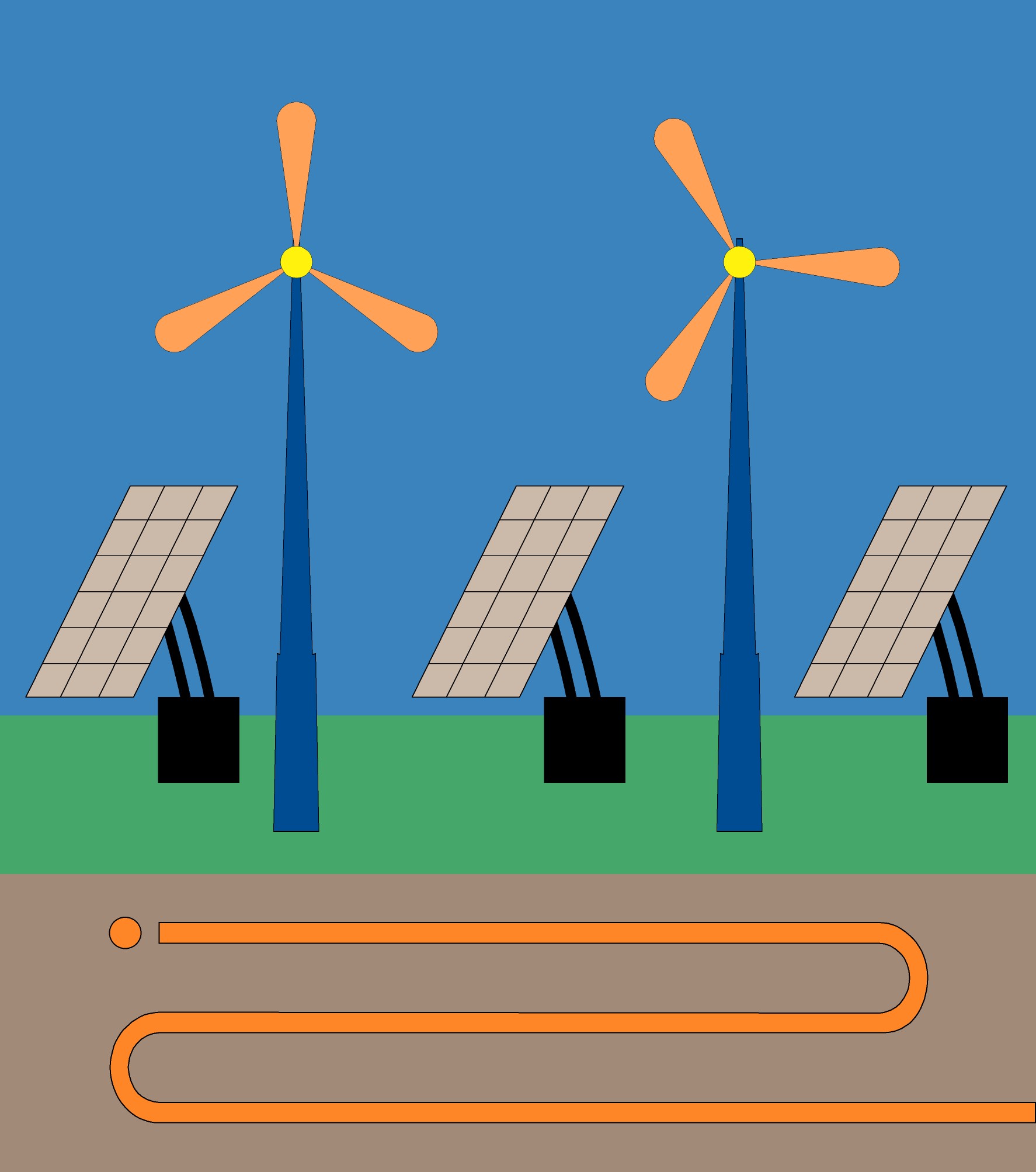
Figure 82. Cross sectional drawing of a three-level power plant
Wind turbines
Windmills in their present form have been manufactured for decades, and adequate comparisons between the different types have been made. The problem is not the technology, but limited production series and high costs. The energy capacity produced by windfarms varies for many reasons. Location is the main factor determining the output of a wind turbine. The wind blows hardest on shorelines and high altitudes, so these sites produce relatively more electricity.
Another factor is size because bigger rotors have a higher reach and take a greater share of available wind. They utilise a thicker and more effective air layer, because the wind blows harder higher up. Wind power is proportional to its velocity to the third exponent. The spacing of turbines is 5-10 times the diametre of the rotor. If they are any closer they overshadow each other and unit output decreases even though the capacity of the entire windfarm per area unit increases. Since wind usually has a prevailing direction, wind turbines can be placed closer together relative to wind direction without loss of output.
In addition to the above, numerous other less important factors effect the capacity of a windfarm. Experts estimate that the annual specific output of an area can be calculated at 7.5 kilowatt hours per square metre and investment costs at ECU 1300 per kilowatt hour. On the other hand, the output is 5 MWh per square kilometre, costing ECU 6 per square metre per subunit (Wind Energy Systems). I have used these values as the basis of my calculations for the whole of Europe, ignoring the fact that windy and less windy places exist both in the north and in the south. Once these windfarms are built on a large scale, many other factors will influence the choice of location than efficiency. One such factor is scenic beauty.
Wind turbines have multiplied rapidly throughout the world. Their total capacity in Europe was 500 megawatts in the middle of 1991, of which 70 per cent was in Denmark. The largest in Europe is the Penrhyddlan & Llidiartywaun windfarm in Wales, which has 103 wind turbines fanning out over the hills (Figure 83). One optimistic plan estimates that wind energy capacity can be raised to 100 000 megawatts by the year 2030 (EWEA, 1991). This is only 13 per cent of the plan proposed in this book. However, if after 2030 the capacity was increased by 20 per cent of 100 000 megawatts each year, the required number of wind turbines would be achieved by 2041. So the two ideas are not so far apart as they appear at first. The return on energy capital invested is crucial when analysing profitability.

Figure 83. Layout of the Penrhyddlan & Llidiartywaun Windfarm, Wales, the largest in Europe in Wales. Each turbine has a capacity of 300 kW.
(Source: Penrhyddlan & Llidiartywaun Windfarm)
Wind turbine technology is not as sophisticated as that of solar panels and no revolutionary improvements are anticipated in the near future. Improvements mainly concern production as only limited series are produced at present. My plan envisages a thousandfold increase, which would mean an annual production of 100 000 wind turbines in Europe. This is less than one per cent of the number of cars manufactured. If the series increases a thousandfold, the price will fall by about a quarter. The idea of a decisive fall in price is not unrealistic.
Thin film solar cells
The next level in the three-level power plant is solar cells. Their technology will improve much faster than that of wind turbines over the next few decades, because new important improvements have been made continually over the last few years. There are two different solar cell technologies for converting sunlight into electricity or heat, and I will describe the most promising one first.
The usual ones are thin film with photovoltaic cells. The most efficient consist of a three-layer structure of different materials like a sandwich. Cell output depends on the materials used in the membranes. Maximum capacity is achieved with a combination of copper-indium-selenium. It may be possible with new materials in the future to achieve an output of 150 watts per square metre. If it is decided to use rare materials then a bottleneck may occur in this technology due to a shortage of raw materials. Normally, if ordinary raw materials such as amorphous silicon are used, the specific capacity of the cells can be calculated at 50 watts per square metre in the northern areas, giving an annual electricity output of 50 kilowatt hour per square metre. The manufacture of amorphous membranes is based on condensation, whereby the crystal structure of the basic material breaks down and the material becomes glasslike.
This type of panel is perhaps the most realistic option for future mass production. Why then is it not possible for this system to be the main source of energy in the future? Cost and the availability of raw materials are considered the obstacles. But are they?
A factory producing solar panels in Lens, France, offers a partial answer to this question. In one respect the technology used is ultra-modern. The core of the solar cells consists of three thin films between two sheets of glass. Very thin films of tin oxide, silicon and aluminium in layers are cut with extreme accuracy into strips of about one centimetre wide. You can see this kind of strip in a pocket calculator operated by a solar cell, for instance. For cutting the strips a groove exactly 0.5 micron deep (micron = one millionth of a metre) is made in the membrane. The grooves divide each membrane into precise strips of equal width, without breaking the membrane beneath formed from a different material. A blue laser beam is used for to make the grooves. The individual stages in this production technology are the most modern in the world. Microscopic accuracy and precision requires a working area comparable in sterility to the pharmaceutical industry, because one spec of dust could endanger the quality of the entire output. Even visitors must be dressed like surgeons (Figure 84).
In another respect the technology is pre-industrial. There are no conveyors linking each process, intermediate stages have to be executed by hand or on very primitive prototype machines. The sheets are carried from one machine to another, each one is individually quality controlled manually, and neither is the so-called factory a factory at all but a research laboratory. This is because of the small production series. This technology is the easiest of the three alternatives suggested here to automate for mass production. I will deal with the significance of the size of a production series later on.

Figure 84. Dominique Guillardeau in the Lens solar panel factory
A brief comment on raw material resources. If silicon, aluminium and tin are used there is no problem, but if more effective materials like selenium, copper and indium are used in the process then an immediate shortage of raw materials will be experienced. The known indium resources are not enough for the mass production of solar panels for the whole continent. This is why this plan is based on available raw materials and uses less effective technology. The amount of material required is adequate because thin films are only 0.5 microns thick.
Single crystal cells
Single crystal silicon cells are also produced in addition to other thin films. The layer is not formed by condensation, but by maintaining its crystal structure. Because of this the cells are more efficient than those described above and the energy they produce per area unit is higher. The layers are much thicker, the production process is expensive and demanding, so the extra capacity gained comes at a cost. The wafers are sliced from crystalline raw material and are 100-300 microns thick. Being ceramic they are brittle and easily break when being cut.
A much more effective technology than the present one has been developed in Australia, the so-called Green’s cell. This also produces solid plates with thin films. Silicon is not in amorphous form but as crystalline silicon cells, which are produced by dripping onto a plate. A film produced by this method is much thinner than the normal crystalline cell film. The most important difference to the traditional solar panel is, however, in the production method. Each drop solidifies into a crystal and the result is thicker than the thin film formed by condensation though thinner than the sliced one. Unfortunately the process is fairly complicated, though the plates can be made either by drip technology or by pouring thin films. In this way the panels produced are highly efficient but the films are still pretty thin. The capacity of such products is 200 watts per square metre and could be increased to 250 watts. The basic difference in this process to the present single crystal solutions is that it is relatively simple and uses a thinner film and thus less material. Its weakness is that it uses a lot of energy to produce the heat required.
Wet solar cells
An alternative to all these technologies is ‘wet’ solar cells, which are not photoelectric but photo-electrochemical. Their operation resembles photosynthesis in nature. It is necessary to technically overcome the physical limitations of the above mentioned production technology effecting the accuracy required and the destruction of the crystalline structure during condensation. In this method a salt solution, a dye and semiconductor particles are spread between glass sheets. The dye absorbs solar energy, then semiconductor particles generate an electric current.
This technology has been developed at the Upsala University in Sweden. The basic structure of the cell is simple. The solution is spread between two glass plates. Because the products are easy to make they can be produced even under rudimentary conditions. The refined technology described above is not necessary. More modern dyes have the ability to regenerate, so the cell is a perpetuum mobile and never wears out. The present capacity obtained by this technique is 100 watts per square metre, but it may be possible to increase it to 150 watts in the future. There will be no raw material shortage as this is abundantly available. The investment needed for cell production is considerably less than for all the other systems described here.
The following values are chosen to illustrate the total capacity of solar panels discussed in the previous example. In northern Europe a capacity of 50 watts per square metre is used, in central Europe 60 watts, and in southern Europe 75 watts per square metre. The annual period of sunshine is assumed to be 1000 hours. It appears that rapid developments in this field can be expected so within ten years cheaper and more diverse products will be available. At present the investment costs of an area equipped with solar panels are ECU 150 per square metre.
Underground pipelines
The third level in Figure 82 is an underground network of pipes that extracts heat by an electrically-operated heat pump. The technique has been extensively applied in Sweden, and the specific efficiency values of energy produced can be worked out on the above quoted calculation.
The amount of geothermal energy available from the ground varies for a number of reasons. Geothermal heat depends on climate, soil characteristics and ground moisture. The purely technical consideration is the spacing and depth of the pipes. More energy is obtained annually from clayey than from sandy soil. A conservative estimate for the colder conditions prevailing in northern Europe gives an annual specific output of 15 kW per square metre. Five kilowatts of electricity has to be used to achieve this amount of heat, which is an underestimate rather than an overestimate. I have used the figures in Appendix 1 in this calculation. From previous experience investment costs work out at ECU 15 per square metre.
The price of energy
Europe is faced with a serious energy problem. Nuclear energy scares people, the burning of coal and oil is totally irresponsible, and traditional energy sources are inadequate. The solution I propose here is criticised for being unrealistic and expensive. Why is it expensive, and could it be cheaper in future?
The crux of the problem and its solution is solar panels. I do not wish to put any of the options in order of merit. They are all still under development and their present costs are no indication of the final ones. The general principle is that the price of a product is in inverse proportion to the logarithm of the length of its production series. Or more simply: when a series doubles, the costs are reduced by 15 per cent (Figure 85). This is valid also for the price of solar panels. The price dependence on the length of a series reflects the proportion of capital costs to production costs.
Here I have planned 136 000 square kilometres of energy fields in Europe. To keep this going presumes an annual production of 5000 square kilometres of panels. This is ten thousand times more than at present and the theoretical price would be 12 per cent of the present cost. It would be definitely competitive with all other energy forms. The most important decision is to start automated, wide-scale industrial production as soon as possible. Imagine what cars would cost if only 1500 were made each year in Europe?

Figure 85. Relation of product price to length of production series
(Source: Suntola, 1995)
Energy storage
I shall not deal with the question of energy storage in great detail. Presumably electricity-hydrogen-electricity is the best of all known systems. Using electricity produced by different means, hydrogen is separated from water by electrolysis, storing or transferring it, and finally burning it in a gas turbine.
The Genesis Plan produced by the Japanese Sanyo company contains some interesting ideas. It is based on moving energy by superconductivity from one side of the globe to the other, and from north to south. In this way the earth’s sunny side would continually produce energy for the entire planet. The problem at present is the development of a superconductive material capable of functioning at high temperatures.
The technology is developing all the time, but the most promising one at present is considered to be a ceramic conductor material. This is brittle and is plaited like ribbon around a pipe containing liquid helium or nitrogen. The boiling point of helium is -269oC and of nitrogen -196oC. Liquid nitrogen is much cheaper than liquid helium, but it imposes more severe limitations on the conductor material. Nevertheless, experimental work in laboratories has advanced so far that the idea of superconductive electricity cables circling the earth are by no means impossible.
The energy plan
The specific values mentioned above are the bases of Europe’s future energy field reservations. I am the first to admit that the bases for these figures can be endlessly criticised. Wind velocity varies in different countries, Denmark and Ireland are more windy than Italy and Portugal. Nevertheless wind velocity is taken as constant in the calculations. Solar radiation differences do not follow borders or latitudes, nevertheless it is natural to assume it is higher in the south than the north. The differences are more or less as proposed. Geothermal energy varies, but for convenience it is assumed to be the same for the whole continent.
Even more arbitrary is my assumption that the heat required is everywhere one third of the electricity required. This scenario envisages a society that no longer uses petrol-driven cars. Forests are assumed to grow better in areas with more solar radiation.
Behind all these simplified assumptions is the idea of setting much more exact initial values and analytical situations in which the need for and location of power plants is concretely investigated. The object is not to claim that the final results of the plan are accurate. It is sufficient of the order of magnitude is correct.
The energy obtained from burning oil and coal is replaced with power plants run on energy wood and by the above mentioned energy fields. The point of departure is Europe’s present energy consumption. How much land should be set aside for energy production is shown in the calculation in Appendix 1.
Present consumption is compared to the future consumption of an assumed ideal population. Countries with a low consumption are raised almost to the average level and others with a high consumption are reduced to a more reasonable level. Energy consumption is reduced in the Nordic countries, Belgium and Holland, raised in the former East Bloc countries, Portugal, Spain and Greece, and elsewhere remains the same. The change is thought to effect only solid and liquid fuels, so the future energy need of Holland is low.
Replacing the estimated amount of energy by the three-level power plants described above would need an area of about 136 000 square kilometres, which is only three per cent of Europe’s land area. The amount of new energy is eight per cent less than what it replaces. The fall in population in certain countries will lead to a decrease in the use of energy, and this will easily compensate for the increase in those countries which will have a higher consumption in the future.
Of all the many plans described in this book, the construction of these energy fields is by far the largest project. This does not only concern the actual construction of the energy fields, but of the network of factories needed to supply the new rotor blades, solar panels, machines for laying geothermal pipelines and so on.
And behind these factories are others producing the machines, measuring equipment, robots, belts and conveyors required to manufacture the rotor blades, solar panels and so on. Five thousand square kilometres of solar panels have to be produced each year. That is a lot, but only 0.25 per cent of the paper produced in Europe now. In the future we shall need factories capable of producing solar panels at the same rate as paper mills produce paper, rather than at the rate factories now produce solar panels.
