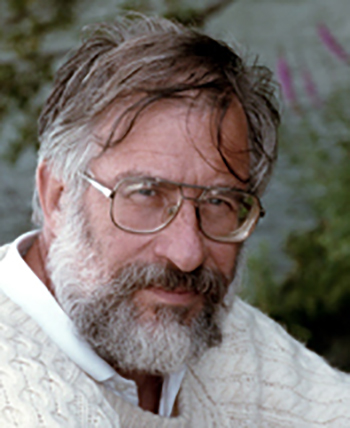
Eero Paloheimo (born 14 June 1936 in Helsinki) is a Finnish Doctor of Technology who has worked as a designer, Member of Parliament, and university professor.
Paloheimo graduated from the Helsinki Normal Lyceum in 1954. He completed his military service in 1954–1955, attended the Reserve Officer School course 86 and was promoted to reserve second lieutenant upon completion of his military service. After military service, he began studying in the Department of Structural Engineering at the Helsinki University of Technology, graduating as a Master of Science in Engineering at the age of 23 in May 1959.
He first worked as a designer at Paul Hammers AG in Hamburg, then as a researcher at CBI-Institutet AB in Stockholm, and subsequently as a bridge designer at the world‑renowned company Dyckerhoff & Widmann AG in Munich.
Paloheimo returned to Finland in 1962 and founded the engineering firm Insinööritoimisto Eero Paloheimo & Matti Ollila in 1965. The office specialized in demanding engineering structures. Paloheimo left the firm in 1994 after having been elected to Parliament in 1987. He served two terms and left politics in 1995 after being appointed Professor of Wood Construction at the Helsinki University of Technology, a position from which he retired in 2000.
Paloheimo holds two doctoral degrees: Dr.-Ing. (Technische Universität München) and D.Sc. (Tech.) (Helsinki University of Technology). His dissertation at the Technical University of Munich was Das Problem der Sicherheit besonders der durch Biegung beanspruchten Spannbetonbrücken, and at the Helsinki University of Technology On the Reliability of Structures and Structural Elements.
He played a decisive role in the founding of the Finnish Green Party [1] and served as a Green MP from 1987 to 1995. He initiated the creation of the Parliamentary Committee for the Future, which became the world’s first parliamentary future committee. It has since been followed by numerous similar bodies in various countries and continents. Paloheimo chaired the committee in 1994–1995.
He was appointed Professor of Wood Construction at the Helsinki University of Technology in 1995 and served in this position until 2000, after which he retired. During this period, he edited the six‑volume series Metsä ja Puu (“Forest and Wood”), which examined the life cycle and processing of wood as a central driver of Finnish society.
He has written twelve books on the environment and the future [2], as well as numerous articles for various journals and anthologies. Among his more recent works are Megaevoluutio (2002), which attracted considerable attention, and Struktuuri (2004). The former explores the development of the universe from the Big Bang to the present day, while the latter presents, through about 500 photographs and accompanying text, the astonishingly similar structures found in nature and culture.
Other notable works include:
Syntymättömien sukupolvien Eurooppa (1996), translated into Estonian, English, and Chinese.
Tämä on Afrikka (2007) and Kiinalainen juttu (2018), both of which can be classified as travel books. The first describes grassroots‑level Africa, while the latter is a suspenseful account of the rise of eco‑cities in China.
The anthologies Sanoin (2011) and Sanoin – Näinkin (2025) compile Paloheimo’s speeches and writings. The former covers the years 1963–2010, and the latter 2010–2025.
Paloheimo’s later projects include the design of eco‑cities in China [3]. These cities are based on ideas presented in Syntymättömien sukupolvien Eurooppa.
In 2015, Paloheimo and Professor U. B. Lindström launched the Unite the Armies campaign, aimed at halting the deterioration of the global environment and redirecting the world’s armies to protect humanity from environmental catastrophes. They wrote an appeal on the matter to UN Secretary‑General António Guterres [4].
His recent activities include the AlfaTV discussion series Maailmaa pelastamassa (“Saving the World”, 2020), the documentary series Struktuuri (2025), and an ambitious project to reforest the Sahara and Sahel regions.
Paloheimo is an enthusiastic chess hobbyist.
[1] Books and Writings/Books/Sanoin/History of the Greens, p. 329
[2] Books and Writings/Books
[3] Books and Writings/Books/Kiinalainen juttu
[4] Books and Writings/Books/Sanoin – Näinkin/Letter to Secretary‑General António Guterres, p. 190

